Word Search Solitaire
- 4.9
- Rating
- 100.00K
- Installs
- Free
- Price
 Analysis by App-foxy
I spent time with Word Search Solitaire as a quiet, easy-to-pick-up word game, and its appeal became clear quickly: it combines familiar word-search play with solitaire-style presentation, giving me something relaxing to do without demanding a long session. It is made by PlaySimple Games, the developer behind several accessible puzzle experiences, and it sits in the word-game category rather than trying to be a broad, complicated brain-training platform.
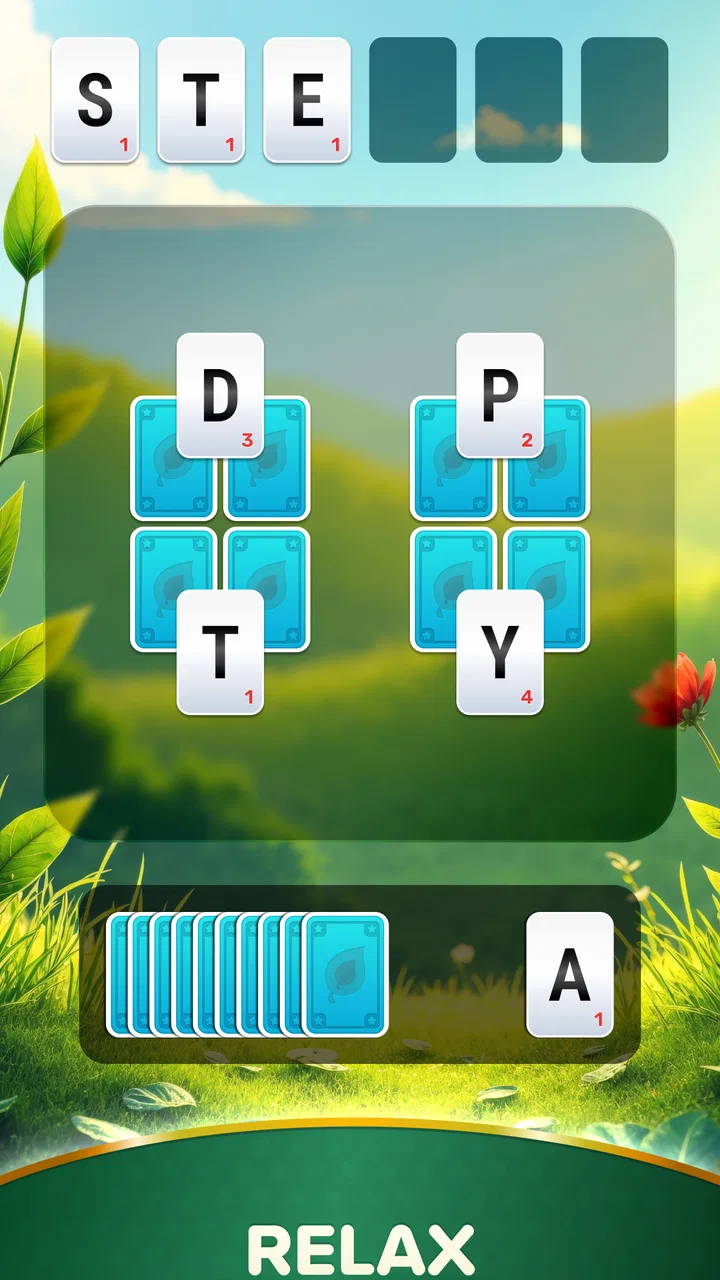
The basic idea is straightforward. I look for words in a letter grid, then move through a progression that adds the calm rhythm associated with solitaire. That combination makes it feel less intense than a timed vocabulary challenge and more structured than opening a random word-search book. The store summary describes it as a way to enhance the mind and unwind, and that balance is a fair description of how I experienced it: the game gives my attention something specific to do while keeping the overall mood gentle.
How Word Search Solitaire feels in everyday play
I find Word Search Solitaire easiest to enjoy when I treat each board as a small, repeatable routine rather than a race: check the word list, scan for distinctive letter patterns, and switch directions when progress stalls. That approach keeps the quiet pace satisfying without turning every puzzle into a test. Next, I’d look at which available settings make that routine more comfortable on your device.
You May Also Like

 Blood Strike: 2.5 Anniversary
Blood Strike’s Loadouts Turn Every Drop Into a Tactical Gamble
A close look at Blood Strike’s custom loadouts: how fast access to signature weapons reshapes its battle royale rhythm, rewards preparation, and narrows the gap between fights.

 Pandora - Music & Podcasts
Pandora’s Music Is Easy to Start, but Harder to Recover
Pandora’s strength is its low-effort path from a seed to a station. Its weak spot is how much confidence it asks you to place in connection, setup, and quiet recovery.

 8 Ball Pool
 Is Built on Rivalries, Rematches, and Routine
A close look at the rivalries, rematches, shared routines, and unanswered safety questions that turn a quick pool match into a persistent mobile community.

 Samsung Music
’s Quiet Strength Is Playing What You Already Own
Its reach comes less from spectacle than from dependable access to a personal library. That simplicity is both the app’s strongest retention engine and its ceiling.

 AccuWeather: Weather Radar
AccuWeather Review: A Quick, Clear Forecast for Everyday Decisions
For everyday plans, the best forecast is the one you can understand quickly. AccuWeather makes rain timing, radar, and local conditions easy to act on, with a few trade-offs.

 Hill Climb Racing
Why Hill Climb Racing Still Turns Crashes Into One More Run
A tiny car, a bumpy hill and one more upgrade: Hill Climb Racing keeps resurfacing because its simple chaos makes every near-miss feel personal.
More From Our News Desk
View All News


A good fit for short, low-pressure sessions
The strongest use case is the small gap in the day. I can imagine opening Word Search Solitaire while waiting for an appointment, taking a break from work, or winding down before sleep. The format does not require me to remember a complicated story, assemble a team, or commit to a long match. I can focus on the letters in front of me and stop when I have had enough.
That simplicity is more valuable than it sounds. Many mobile games use short sessions as a reason to push urgency, streaks, or constant competition. This one works better when approached as a mental pause. I am still scanning, comparing, and recognizing patterns, but the task is familiar enough that it does not feel like homework. For someone who enjoys word searches but wants a more game-like structure, the solitaire element gives the activity a sense of progress.
It is also suitable for players who prefer a slower pace. The age rating is Everyone, so the presentation is intended to be broadly accessible. I would still treat that rating as a statement about suitability rather than a guarantee that every player will enjoy it. Younger players who want fast action may find the search process too quiet, while adults looking for a peaceful puzzle may appreciate exactly that quality.
The combination is pleasant, but not radically new
Word Search Solitaire does not reinvent either part of its formula. Word searches are familiar, and solitaire is one of the most established casual game formats on phones. The value comes from putting those ideas together in a convenient package. In my experience, the blend works because the word-search activity supplies the concentration and the solitaire framing supplies a light sense of routine.
Compared with a traditional printed word-search book, the game is more convenient and more responsive. I do not need a pen, I do not lose my place as easily, and the phone can guide me through the experience. Compared with a conventional solitaire app, it offers more language-focused attention and less emphasis on card strategy. Compared with competitive word games, it feels less stressful because I am not constantly measuring myself against another player.
That comparison also reveals the main trade-off. If I want deep vocabulary practice, a crossword app or a serious word puzzle may offer more variety in reasoning. If I want card decisions, a dedicated solitaire game will probably feel richer. Word Search Solitaire is best understood as a middle ground: a casual word activity with a familiar solitaire flavor.
What I would do differently from a first-time player
My first practical tip is not to scan the grid randomly. I get better results by checking the word list, choosing a distinctive starting letter, and then looking for likely directions from there. Long words are often easier to spot when I search for their unusual letter combinations rather than trying to inspect every row from left to right.
A second useful habit is to change the way I scan when I get stuck. Instead of staring harder at the same area, I look diagonally, then vertically, and finally at reversed patterns. This sounds obvious, but word-search fatigue makes players repeat the same horizontal scan without noticing. A short change of method is usually more helpful than using assistance immediately.
I also prefer treating difficult boards as observation puzzles rather than tests of speed. The game is more enjoyable when I allow myself to inspect clusters of letters and confirm a possible word carefully. That approach makes it a better fit for relaxing breaks and reduces the temptation to turn every puzzle into a race.
What the current release tells me about the product
The current version is 1.72.0, while the game was released on December 13, 2024. Those details place it in an active stage of development rather than presenting it as an old, finished utility. I see the version number as evidence that PlaySimple Games has continued working on the product after launch, although a version number by itself does not tell me exactly which parts changed.
For existing players, that matters mainly because ongoing releases can make a casual game feel more dependable over time. A player who started near launch may notice a more settled experience in the current build, but I would not assume that every update changes the core formula. The central appeal remains the same: finding words in a puzzle setting that borrows the relaxed progression of solitaire.
The game requires Android 7.0 or later, which keeps it available to many older Android phones and tablets. That is useful if I am installing it on a secondary device or an aging phone rather than a recent flagship. At the same time, compatibility alone does not guarantee that every screen size or device feels equally comfortable. Word-search boards depend heavily on readable letters and accurate touch selection, so a smaller display may make longer sessions less pleasant.
How the game fits different kinds of players
I would recommend it to someone who likes word searches, casual puzzles, and games that can be played without a large time commitment. It is especially suitable for players who want a gentle routine rather than a demanding challenge. The combination may also appeal to people who already alternate between word games and solitaire and would rather keep both interests in one app.
I would be more cautious about recommending it to someone seeking advanced language learning. Finding hidden words can exercise attention and recognition, but it is not the same as studying definitions, practicing spelling deliberately, or building a structured vocabulary. I would also point competitive players toward a game with timed rounds, leaderboards, or direct multiplayer if those are the features that make word games exciting for them.
Players who dislike repeated casual formats should think carefully before installing. The formula is intentionally focused, and its strength is consistency rather than dramatic variety. If I need a constantly changing adventure, a narrative puzzle, or a strategic card system with many decisions, this is probably not the right choice.
Free to start, with an important cost consideration
Word Search Solitaire is free to download, which makes it easy to try without committing money at the beginning. That is the right model for this kind of casual game because I can test the pace, readability, and puzzle style before deciding whether it deserves a permanent place on my phone.
There are in-app purchases ranging from $2.99 to $79.99 per item. That range is worth noticing before I become invested in the game. A free entry point is convenient, but optional purchases can change how comfortable the overall experience feels, especially for players who prefer to avoid spending inside games. I recommend deciding in advance whether I am treating the app as a completely free pastime or as a game where occasional purchases might be acceptable.
My practical advice is to play for a while before buying anything. First, I would check whether the basic progression already gives me enough enjoyment. Then I would consider whether a purchase solves a specific annoyance or simply appears at a moment when I am impatient. That small pause helps keep a relaxing word game from turning into an unplanned expense.
What existing users may notice over time
For a returning player, the most meaningful effect of continued development is likely familiarity. A casual game becomes part of a routine when it is easy to reopen and understand immediately. The current build preserves that low-friction identity rather than asking me to relearn a complicated system every time I return.
That can be a strength, but it also creates a limitation. Players who have already spent a great deal of time with the game may eventually want more substantial changes than a polished version of the same loop. Without turning the experience into something entirely different, future development would need to keep the puzzle journey feeling fresh. New layers of challenge, better ways to revisit completed play, or more meaningful control over difficulty would be the kinds of improvements I would watch for.
I would not judge the game solely by the number of available puzzles or by how quickly I move through them. The better question is whether the search process remains satisfying after the novelty fades. For me, the answer depends on mood: it works well when I want calm concentration, but it is less compelling when I am craving surprise or a strong sense of mastery.
Where the experience still has room to improve
The biggest gap is depth. The word-search and solitaire pairing is pleasant, but the underlying activity remains simple. That is not a flaw for a player who wants an uncomplicated break, yet it limits the game’s appeal for anyone looking for layered strategy. I can enjoy the routine without mistaking it for a demanding puzzle system.
Another possible friction point is the balance between assistance and discovery. In any word-search game, help can be useful when a board stops being fun, but too much assistance can remove the satisfaction of finding the answer. I prefer using hints only after changing my scanning pattern and taking a short break. That preserves the feeling that I solved the puzzle rather than merely completed it.
The solitaire framing may also divide players. Some people will enjoy the familiar structure, while others may feel that it is decorative rather than strategically important. If I install the game expecting a full card-game experience, I may be disappointed. If I see the solitaire idea as a relaxing wrapper around word searches, the design makes more sense.
There is also the question of long-term value. The free price makes experimentation easy, but the purchase range means I should evaluate the game based on how often I actually return to it. A game that is perfect for occasional breaks may not justify spending at the upper end of its purchase options, particularly if I am satisfied with short sessions.
What to watch as PlaySimple Games continues development
Because the game has moved from its release build to version 1.72.0, I would pay attention to whether future updates improve variety without losing the calm identity. The best direction would be meaningful freshness: puzzles that remain readable and approachable while giving experienced players a reason to keep exploring.
I would also watch how well the game serves different screen sizes and older Android devices. Its minimum operating-system requirement is Android 7.0 or later, so accessibility across compatible hardware is part of its practical appeal. Clear letter presentation and reliable touch interaction matter more here than flashy visual changes because a single missed selection can disrupt the relaxed flow.
For current users, the sensible approach is to keep expectations realistic. A new version may refine the experience, but the reason to stay should be that the core activity still suits your routine. I would continue playing if I wanted a dependable word break, not because I expected the game to transform into a completely different genre.
The game has an average rating of 4.8 from around 5.1 thousand ratings, with over 300 written reviews and more than 100 thousand installs. Those figures suggest that the simple format is connecting with a substantial group of players, but they should not replace personal testing. Ratings cannot tell me whether the pace feels satisfying on my phone or whether the purchase model fits my habits.
My recommendation after using it
Word Search Solitaire is a good choice when I want a free, approachable word game that turns a familiar search puzzle into a softer solitaire-style routine. I like it most for short breaks, quiet evenings, and moments when I want to keep my mind occupied without dealing with pressure or complicated rules.
I would skip it if I need serious vocabulary instruction, intense competition, or a rich card strategy experience. I would also avoid spending quickly until I know that the basic loop remains enjoyable after the first few sessions. The game’s value is in its steady, uncomplicated rhythm, and that will appeal strongly to some players while feeling too limited to others.
Overall, I see it as a friendly casual game rather than a major word-puzzle challenge. PlaySimple Games has built a focused experience that is easy to understand and easy to return to. If you want a calm word-search break with a solitaire-inspired structure, this is worth trying free first. Its current version shows a product that is still being maintained, while its remaining limitations make the decision depend mainly on whether you prefer relaxing repetition or deeper variety.
FAQs for Word Search Solitaire
01What is Word Search Solitaire and how does it work?
Word Search Solitaire combines classic word search puzzles with solitaire card game mechanics. Players find words in a grid and use them to clear cards from the tableau. The goal is to discover words and strategically clear cards to progress through levels. It’s a unique blend of word-solving and card strategy.
02Is Word Search Solitaire available for both Android and iOS devices?
Yes, Word Search Solitaire is available for download on both Android and iOS platforms. Users can find the app on the Google Play Store for Android devices and the Apple App Store for iOS devices. Ensure your device meets the app's system requirements for optimal performance.
03Are there any in-app purchases or ads in Word Search Solitaire?
Word Search Solitaire offers a free-to-play experience, but it includes in-app purchases for additional features or game enhancements. While playing, users may encounter ads, which can be removed through a one-time purchase. This model allows users to enjoy the game for free while offering optional paid content.
04What are the main features of Word Search Solitaire?
Word Search Solitaire features a variety of levels with increasing difficulty, daily challenges, and a leaderboard to compete with friends. The game also includes customizable themes and hints to assist players. It combines engaging word puzzles with strategic card play, offering a refreshing twist to traditional games.
05Can I play Word Search Solitaire offline?
Yes, Word Search Solitaire can be played offline, making it a perfect choice for on-the-go gaming without the need for an internet connection. However, some features, like daily challenges and leaderboards, require an internet connection to function properly.
Pros
- Engaging word challenges enhance vocabulary.
- Simple interface for easy navigation.
- Offline play available for convenience.
- Daily puzzles keep content fresh.
- Customizable themes for personalization.
Cons
- Ads can interrupt gameplay experience.
- Limited hints may frustrate beginners.
- No multiplayer mode for social play.
- Occasional lag on older devices.
- In-app purchases can be costly.

Word Search Solitaire
Gallery